

.png)
The Real Cost of Manual 3PL Billing: What Spreadsheets Are Costing You Every Month

If you run a 3PL, billing probably isn't the part of the business you love most.
It's the part that happens after the real work is done, after the freight moves, after the customer is happy, after your team has hustled through another week. And because it comes last, it often gets handled fast.
A few spreadsheets. Some manual exports from your shipping platform. A few hours of cross-referencing. Send the invoice.
The problem? That process — the one that feels routine — is quietly costing you more than you think.
Not just in time. In actual revenue.
Let's talk about what manual 3PL billing is really costing you per month, and why more operators are finally making the switch to smarter 3PL billing software.
First, Let's Acknowledge What Manual Billing Actually Looks Like
Most 3PLs didn't set out to build a billing process around spreadsheets. It just happened that way.
You started with a handful of customers. You built a system that worked. And as volume grew, that system grew with it. Layer by layer, formula by formula, tab by tab.
Today, for a lot of operators, manual 3PL billing looks something like this:
- Pulling raw shipment data from your WMS or carrier portal
- Importing it into a spreadsheet
- Applying markups, fees, and surcharges manually
- Cross-checking against carrier invoices to catch discrepancies
- Building a client-facing invoice that's readable and accurate
- Chasing down anything that doesn't reconcile before sending
If that sounds familiar, you already know the truth: it takes hours. Sometimes a lot of them.
And hours, in a business running on thin margins, are expensive.
The Time Cost Is Bigger Than You Think
Here's a quick back-of-the-napkin exercise.
If your team spends 10 hours a month on manual billing and reconciliation and for many 3PLs it's closer to 20 or 40. What does that actually cost?
At a fully loaded labor rate of $35/hour, 40 hours of billing work per month equals $1,400 in direct labor costs. Every single month. $16,800 a year, just to produce invoices.
And that's before you account for the cost of errors.
Because the real danger in manual 3PL billing isn't the time it takes. It's what slips through the cracks while you're doing it.
What Slips Through: The Revenue You're Leaving Behind
Manual billing processes are prone to gaps. Not because your team isn't careful but because the complexity of 3PL billing makes manual accuracy genuinely hard to maintain at scale.
Here's what commonly gets missed:
Surcharges that don't get captured. Residential delivery fees, address correction charges, fuel adjustments, these shift constantly. If your billing process relies on a static rate card or manual entry, it's easy for these to fall through, especially on high-volume accounts.
Accessorial charges that go unbilled. Dimensional weight adjustments, Saturday delivery premiums, extended area surcharges, any one of these, missed across hundreds of shipments, adds up fast.
Carrier invoice discrepancies that never get caught. When you can't quickly match what a carrier billed you against what you charged the client, overcharges often go unnoticed. You absorb the difference.
Markups applied inconsistently. When pricing logic lives inside a spreadsheet instead of a system, markups can drift, especially when multiple people touch the billing process or when new service types get added.
Any one of these issues is manageable in isolation. But across a full month of billing, across multiple customers and carriers, they compound.
Conservative estimates suggest that manual billing errors and missed charges can cost a growing 3PL anywhere from 1% to 3% of total revenue. On a $500K/month operation, that's $5,000 to $15,000 walking out the door every single month.
The Hidden Cost Nobody Talks About: Client Relationships
There's another cost to manual billing that rarely shows up in a spreadsheet but feels very real in practice.
Billing disputes.
When invoices are built manually, inconsistencies happen. Charges appear without clear context. Clients push back. Your team has to dig into the data, explain the math, and rebuild trust — all while managing everything else on their plate.
Over time, unclear billing becomes one of the most common reasons 3PLs lose customers they should have kept.
It's not that the client was unhappy with operations. It's that the invoice experience created friction, and friction erodes relationships.
Clean, transparent, automated billing, the kind that modern 3PL billing software makes possible, removes that friction entirely. Clients see exactly what they're being charged and why. Disputes become rare. Trust becomes a competitive advantage.
Where 3PL Billing Software Changes the Equation
This isn't about replacing your team. It's about removing the manual work that's slowing them down and creating the gaps that cost you money.
Good 3PL billing software does a few specific things that manual processes simply can't:
It captures surcharges and accessorials automatically. Every fee, every adjustment, every carrier-side change gets reflected in the invoice without someone manually hunting it down.
It applies your markup logic consistently. No spreadsheet drift. No missed rate updates. Pricing rules live in the system and get applied the same way every time.
It connects carrier billing to client invoices. Discrepancies get flagged before invoices go out and not discovered weeks later during reconciliation.
It produces billing your clients can actually understand. Clean, clear, consistent invoices that build confidence instead of confusion.
The shift isn't just operational. It's financial.
When billing becomes automated and accurate, you stop leaving revenue on the table. You protect margin on every account. And you free up the hours your team was spending on reconciliation to focus on things that actually grow the business.
What This Looks Like in Practice
Skale Fulfillment, a growing 3PL, was dealing with exactly this problem. Billing was time-consuming. Manual reconciliation was eating hours. And there was limited visibility into whether invoices were capturing everything they should.
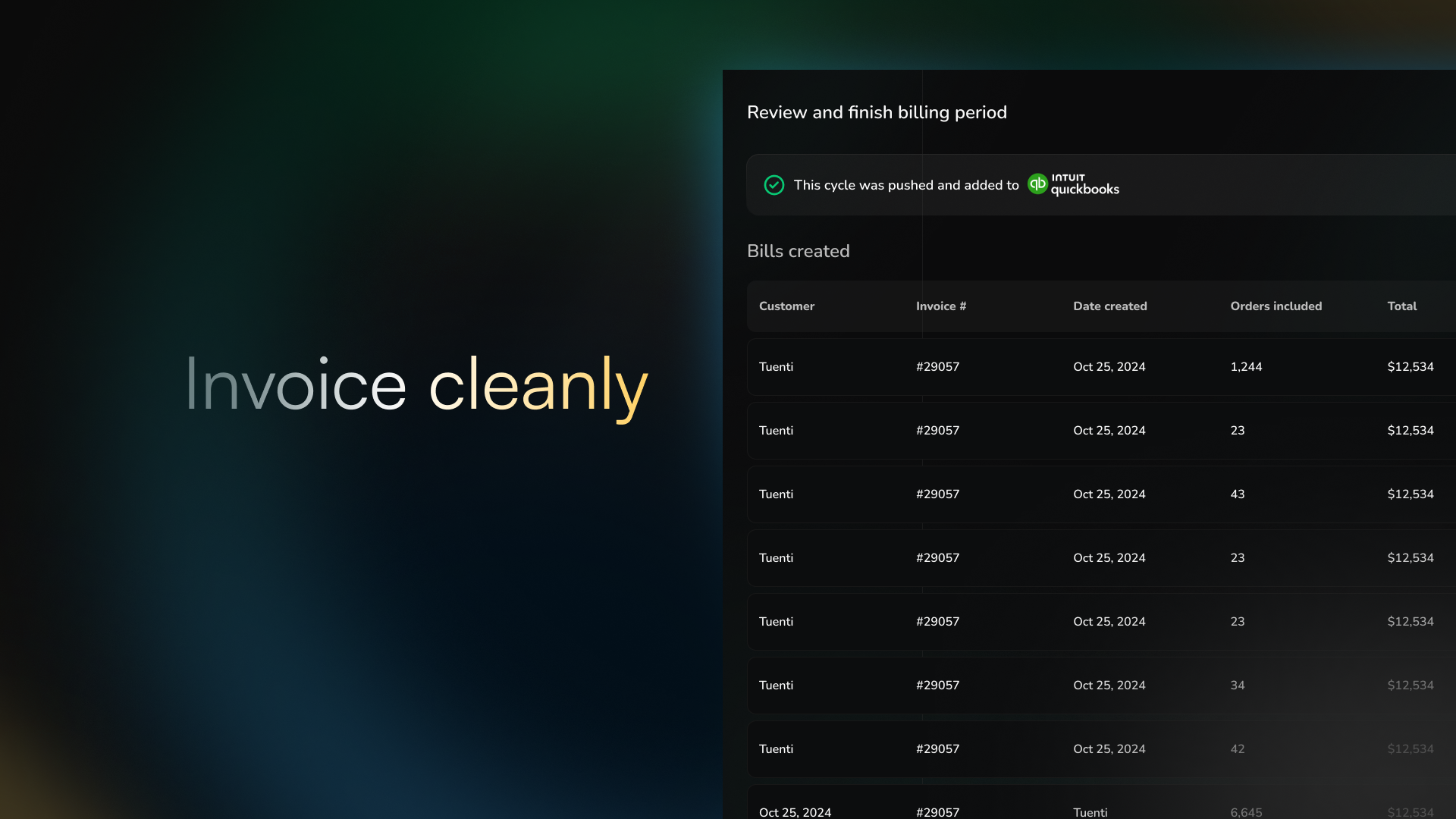
After implementing DiversiFi's AI Dynamic Billing, Skale reclaimed 20 to 40 hours per month that had been going into manual invoicing. Revenue increased 20% — not from new customers alone, but from pricing and billing that was finally accurate and complete from day one of each new customer relationship.
As their CEO Trevor Wiggins put it: the goal isn't just to ship more packages. It's to run a smarter, more profitable 3PL without the chaos.
Better billing is a big part of how that happens.
The Right Time to Make the Switch
There's never a perfect moment to change how billing works. It always feels disruptive. There's always another quarter, another busy season, another reason to wait.
But here's the question worth asking: if your billing process is costing you 20+ hours a month and potentially thousands in missed revenue, what is staying with the status quo actually costing you?
Most 3PL operators who move to automated billing say the same thing afterward: they wish they had done it sooner. Not because the platform was magic but because the clarity it created changed how they ran every other part of the business.
Better billing data means better pricing decisions. Better pricing decisions mean better bidding. And better bidding means growth that's actually profitable.
That's the real return on 3PL billing software. It's not just the hours saved. It's the margin protected, the revenue captured, and the confidence that comes from knowing your numbers are right.
Ready to See What Smarter Billing Looks Like for Your 3PL?
DiversiFi's AI Dynamic Billing was built specifically for 3PLs that are done guessing and ready to grow with clarity. From automated surcharge capture to client-ready invoicing, it replaces the manual work with a system that protects your margin on every shipment.
Get a demo and see what your billing process could look like.
Continue learning



See AI for your 3PL In Action
Discover how our solutions can drive your success.