

What Parcel Forum 2026 Told Us About Where the Industry Is Headed

Parcel Forum 2026 wrapped up in Orlando at the Gaylord Palms Resort, and it was one of the more signal-rich editions in recent memory. Roughly 2,000 attendees, 140 plus exhibitors, and three days of sessions built entirely around small-package fulfillment. No broad supply chain noise. Just carriers, operators, analysts, and technology leaders working through the same questions that 3PLs and shippers are navigating right now.
The DiversiFi team was there throughout. Here is what stood out and what it means for operators thinking about the next 6-12 months.
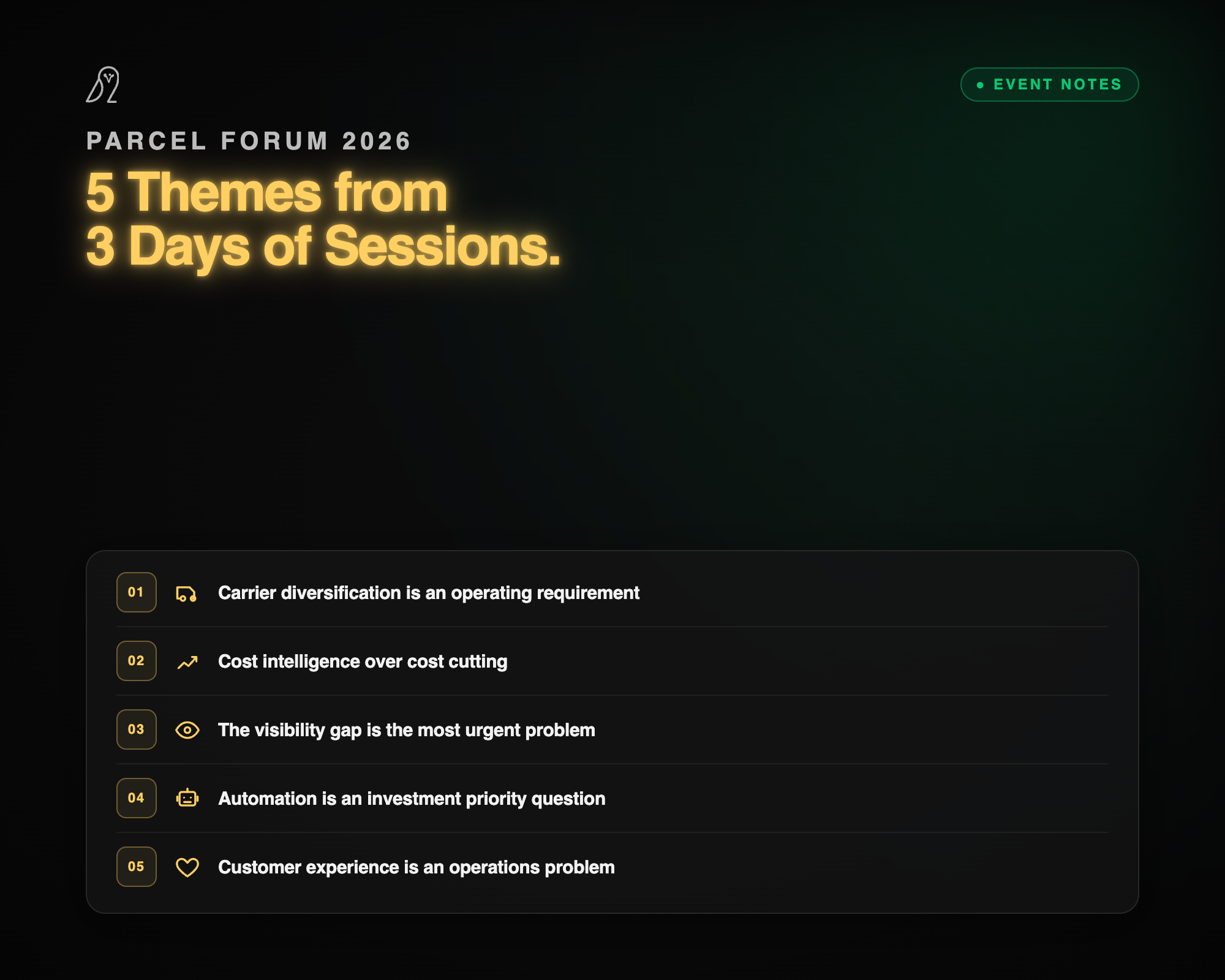
Carrier Diversification Is No Longer a Strategy. It Is an Operating Requirement
This was the most consistent theme across the entire conference, and it came from every direction. Carrier and logistics leaders, shippers with real operational data, and brands all said versions of the same thing: the national carrier landscape is contracting by design, and the volume being left behind is moving to regional and alternative providers permanently.
We are in the middle of a new parcel carrier landscape. The operators who have already built relationships with regional carriers are not scrambling when a national reprices or pulls back on a lane. The ones who have not are reacting instead of positioning.
The Tusk Alternative Carrier Benchmark Report, put the data behind this. Alternative carriers have grown at a 32.8% compound annual rate over four years while the Big 3 contracted at 2.4% annually. At Parcel Forum, that data was showing up in real operational conversations, not just research decks.
For 3PLs, the implication is direct. The carrier mix that worked in 2022 is not the same carrier mix that will serve your clients best heading into 2027. Carrier diversification is no longer a future initiative. It is the current operational question.
Cost Cutting Is Being Replaced by Cost Intelligence
The closing keynote from Yehia Amar at Boston Consulting Group introduced the most useful reframe of the conference. BCG's survey of shipping executives across North America and Europe drew a clear distinction between cost cutting and cost intelligence. Cost cutting asks where spend can be reduced. Cost intelligence asks where margin is actually going and what data is needed to protect it.
That distinction landed in the room because it names something operators have been feeling but not always articulating clearly. Squeezing carrier rates is a diminishing return. Understanding the true margin on every lane, every account, and every surcharge cycle is where sustainable profitability lives.
The sessions on carrier contract management and parcel P&L visibility reinforced this from the practitioner side. Operators who walk into carrier negotiations with lane-level performance and cost data are getting materially better outcomes than those who rely on general estimates. The data is not just a reporting tool. It is a negotiating asset.
For 3PLs, this reframe is especially important because you are managing cost intelligence on behalf of your clients as well as for your own operation. When you can show a client exactly what their freight is costing, lane by lane and surcharge by surcharge, that is not just transparency. It is a service that changes the nature of the relationship.
The Visibility Gap Is the Most Urgent Operational Issue
Trust in alternative carriers has measurably improved. But as the trust barrier comes down, a different barrier is rising: the operational complexity of managing a diversified carrier mix without centralized visibility.
Managing carrier cost, service levels, and post-purchase customer experience as three separate systems is the root cause of most operational failures in multi-carrier environments. When those three things live in disconnected tools, decisions get made on incomplete information and the gaps show up in billing disputes, client complaints, and missed margin.
The carriers themselves are part of this complexity. Different zone definitions, different surcharge schedules, different invoice formats, different claims processes. An operator running five carriers without a centralized system is managing five different operational realities simultaneously. The friction compounds with every carrier added.
87% of shippers say a centralized platform for tracking, claims, and rate management would make them more likely to adopt alternative carriers. Parcel Forum confirmed that the appetite for that solution is real and urgent. The operators who solve this problem for their clients will have a meaningful retention advantage.
Automation Has Moved From Optional to Investment Priority
AI and automation were present in almost every track at Parcel Forum, not just the technology sessions. The framing has shifted. 2 years ago, the question in these rooms was whether AI had a real role in parcel operations. This year, that question was settled. The conversation is now about which processes to automate first and how to sequence the investment for maximum return.
Operators still treating routing and network decisions as annual planning exercises are behind competitors who are making dynamic decisions in near real time. The same logic applies to billing, where manual rate card updates and surcharge calculations introduce lag that costs margin on every billing cycle.
Warehouse slotting, routing orchestration, returns management, billing, and carrier performance tracking all came up as automation priorities across different sessions. The consistent thread was that manual processes in any of these areas create compounding errors at scale. The 3PLs that are growing the fastest are automating the repetitive decision-making so their teams can focus on the exceptions, the client relationships, and the strategic moves.
Customer Experience Is a Parcel Operations Problem
Several sessions connected carrier selection and delivery performance directly to retention and loyalty metrics in a way that reframes how 3PLs should think about routing decisions. Who you ship with and how you manage exceptions is not just an operations decision. It is a brand promise decision. When something goes wrong in delivery, the shipper absorbs the relationship cost, not the carrier.
Nearly one in five brands in the Third Person marketplace data, which we covered in an earlier post, referenced wanting direct human contact in their very first outreach message. They are filtering for responsiveness and accountability before price even enters the conversation. The 3PLs who understand that delivery performance and billing accuracy are client retention tools, not just operational metrics, are the ones building the kind of relationships that do not go out to bid every contract cycle.
What the Event Floor Was Saying Between Sessions
The formal sessions are half the picture at conference events. The conversations in the hallways and at the exhibit hall tend to be more candid than anything said on stage.
A few things came up consistently in those conversations.
Carrier pricing anxiety is real and immediate. Most shippers we spoke with have absorbed multiple rounds of GRIs and surcharge increases and are at or past the point where certain lanes no longer make economic sense at current national carrier rates. The question is not whether to diversify. It is how to manage the complexity that comes with doing it.
Billing accuracy was named more often than we expected as a persistent pain point. Multiple 3PLs described running on rate cards that have not been updated in a quarter or more or dealing with platforms that don't offer a complete billing picture that leaves them filling the gaps. They know the problem exists. The barrier is having the process to fix it while also running the operation.
Trust continues to be a driving theme. Can I trust that pricing is going to be accurate? Can I trust that data from 3rd parties is correct? Can I trust a certain company to have my back? For as much as technology changes the industry, building relationships and connecting with people face to face continues to be one of the most important aspects of being in business.
Continue learning

See AI for your 3PL In Action
Discover how our solutions can drive your success.